


Table of Contents
- From Experimental Light Beams to Professional Concert Tools
- Why Concert Lasers Influence Audience Experience
- How Laser Systems Fit Into Modern Production Workflows
- Selecting Concert Laser Lights: What Professionals Actually Prioritize
- Why Concert Laser Systems Deliver Exceptional ROI
- The Future of Concert Laser Innovation
In modern entertainment, concert laser lights are no longer optional—they are fundamental to how large-scale events define space, movement, and emotional intensity. As stages evolve from two-dimensional lighting grids into immersive environments, concert lasers have become central tools for lighting companies, rental houses, and show designers looking to build memorable, high-impact productions. Unlike conventional fixtures, laser beam lights carve visible architecture into the air, giving designers direct control over shape, depth, and atmospheric motion.
For B2B buyers, the value of lasers for concerts is measured not only by visual impact but by their reliability, integration, and return on investment. This article explores the real engineering behind modern laser lighting effects, why they have become essential for touring productions, and what professional users should prioritize when specifying long-throw stage laser systems for arena shows, festivals, and corporate spectaculars.
From Experimental Light Beams to Professional Concert Tools

When lasers first entered live entertainment in the 1970s, they were treated as special-effects novelties. Today, they are engineered performance instruments. As the demands of festivals and arena tours expanded, so did the capabilities of light show lasers, moving from simple scanned shapes to full 3D lasershows capable of operating alongside media servers, video mapping, and synchronized automation.
The transformation wasn’t simply about brighter output. What changed was the role of lasers and lights in the production ecosystem. A well-designed concert light show relies on lasers to create aerial geometry—tunnels, fans, waves, volumetric ceilings—that define how the audience perceives the space. Beams now travel cleanly across stadium-length distances, maintaining form even in high ambient light. High-resolution scanning has enabled smooth vector animations, allowing music lasers to complement both rhythm and staging.
With rugged housings, stable optical modules, and advanced cooling, laser projectors have evolved from fragile curiosities into dependable touring workhorses that lighting companies and rental houses rely on with confidence.
Why Concert Lasers Influence Audience Experience

The power of concert laser lights lies in their ability to hold precise form over distance. LEDs and moving heads spread light outward, while lasers maintain a tight, coherent shape. This difference is what makes laser light effects feel sharp, intentional, and architectural.
For outdoor events, this distinction is critical. A properly engineered outdoor unit can turn a night sky into part of the stage, extending beams far beyond the truss line and creating structures audiences can physically feel around them. In indoor environments, music laser light fixtures can transform a room into an immersive atmospheric chamber, shifting tone from intimate gradients to expansive aerial waves.
Another factor is the emotional connection. Lasers articulate rhythm visually. They punctuate transitions. They frame musicians. They amplify the build and drop of the track. This is why touring LDs often refer to lasers as “visual phrasing.” When integrated into timecode-driven sequences, a laser light concert becomes an extension of the music rather than a background element.
How Laser Systems Fit Into Modern Production Workflows

Today’s productions are dominated by synchronized systems—lighting, video, pyro, automation—controlled through unified show networks. Lasers must integrate at this level to be viable for professional buyers.
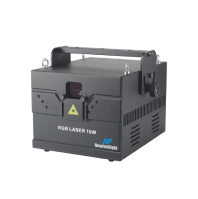
Modern fixtures from Newfeel Light act as fully addressable light show devices, communicating over DMX, Art-Net, ILDA, timecode, or software-based control. This ensures lasers are not isolated elements but coordinated parts of the show ecosystem. When paired with haze or atmospheric systems, even a single projector can create sweeping volumetric effects that fill a space more efficiently than dozens of traditional fixtures.
For EDM and festival markets, Rave laser machine units must withstand extended runtime, outdoor temperature shifts, rapid setup cycles, and aggressive touring schedules. Rental companies value systems that remain color-stable, maintain alignment through transport, and offer predictable scanning behaviors across multiple units.
In corporate and theatrical environments, designers rely on precise control, clean vector performance, and stable repeatability—requirements that define high-grade music laser projectors.
Selecting Concert Laser Lights: What Professionals Actually Prioritize

Professional buyers rarely evaluate lasers the way consumers do. Brightness is important, but beam divergence, scanner performance, diode stability, and optical consistency determine whether a unit can handle real touring conditions.
Power with purpose
Venue size determines output. Smaller rooms may need 3–8W units, while outdoor festival shows depend on 20–40W projectors designed for long-throw aerials. High-output lasers lights must maintain clarity without overspreading—something only high-quality optics can achieve.
Beam geometry matters
A low divergence rating is essential for clean aerial patterns. It ensures fans, tunnels, and sheets maintain crisp lines, especially when layered across multiple projectors.
Scanning stability
High-speed scanning is the backbone of modern light show machines. Smooth motion, fast transitions, and noise-free vector animation are essential for professional environments, especially when running complex cues.
Color & diode quality
For synchronized multi-unit shows, color balance must match across fixtures. High-end RGB modules hold spectral consistency even after long runtimes, reducing variations in color quality that can disrupt large-scale laser light effects.
Control system compatibility
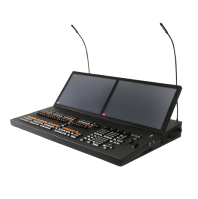
Lasers must seamlessly integrate with media servers, consoles, and timecode systems. Professional projection demands reliable networking, secure data transmission, and predictable cue behavior.
For production companies, these factors determine whether a system is viable across multiple venues, seasons, and event types.
Why Concert Laser Systems Deliver Exceptional ROI

In terms of visual impact per fixture, lasers provide unmatched value. A single projector can create massive volumetric effects, long-range aerial architecture, and precise motion without requiring dozens of fixtures or additional rigging infrastructure. For rental houses, long equipment lifespan and low maintenance further increase their return.
This efficiency is why light show lasers have become standard tools for:
Festival mainstages
Arena tours
Immersive installations
Corporate spectaculars
High-end nightclub designs
Touring DJ shows
Outdoor city celebrations
From large outdoor beams to precise indoor vector art, lasers offer a creative range unmatched by any other fixture category.
The Future of Concert Laser Innovation

The next generation of concert lasers is already taking form. We are seeing rapid development in compact, high-output projectors, improved optical efficiency, automated calibration, and cross-platform network integration. Many upcoming shows will rely on multi-laser arrays designed to interact with video, scenic automation, and environmental atmospheres in real time.
As live entertainment becomes more cinematic, the importance of aerial structures, volumetric effects, and synchronized imagery will continue to grow. For designers seeking to elevate stage narratives, and for rental houses building competitive inventories, the evolution of concert laser lights will remain a defining factor in show design.
Newfeel Light continues to engineer systems that meet these demands head-on—durable, color-accurate, high-output projectors optimized for professional workflows and built for the realities of touring.


