


Table of Contents
- Wattage Doesn’t Tell the Whole Story
- Beam Control Is What Makes Light Look Bright
- Moving Heads and Spot Fixtures Serve Different Purposes
- LED Quality Makes or Breaks Output
- Heat Management Is the Hidden Enemy
- DMX Precision Affects Perceived Brightness
- Venue Size Changes Everything
- Why Professionals Rarely Complain About Brightness
- Final Thoughts
You install a new set of stage lights, power them up, and… something feels off. On paper, they’re rated at 150 or even 200 watts. In reality, they don’t cut through haze, the beams feel weak, and the room never quite reaches the energy you imagined.
If this sounds familiar, you’re not alone. DJs, rental companies, and production teams run into this issue every day. And almost always, the mistake is the same: assuming wattage equals brightness. It doesn’t.
At Newfeel Light, we’ve worked with countless professionals who upgraded from entry-level fixtures to true professional moving head lights and were surprised by how much brighter everything suddenly looked—without dramatically increasing power. The difference comes down to how light is shaped, controlled, and sustained during real shows.
Wattage Doesn’t Tell the Whole Story

Wattage only describes how much electricity a fixture consumes. It says nothing about how efficiently that energy becomes visible light on stage.
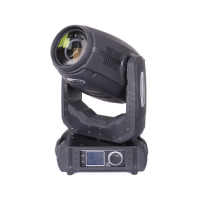
Two moving head lights with the same wattage can perform completely differently once they’re hung on a truss. A well-designed beam moving head light concentrates light into a tight, focused shaft, while a poorly designed fixture spreads that same energy thinly across the room.
This is why many cheap moving head lights look acceptable in a warehouse demo but struggle in clubs or event spaces. Once haze, distance, and ambient light come into play, the weaknesses become obvious.
Brightness is about delivery, not numbers.
Beam Control Is What Makes Light Look Bright
One of the biggest factors in perceived brightness is beam angle. Narrow beams stay intense over distance. Wide beams soften quickly.
This matters most for dj moving head lights and moving lights used in haze-heavy environments. If the optics aren’t precise, the beam fades before it reaches the audience. That’s when people say their lights “aren’t bright enough,” even though the LEDs are technically powerful.
Professional beam moving head fixtures use carefully engineered lens systems to keep beams tight, clean, and uniform. The edges stay sharp, the center stays intense, and the beam remains visible across the room.
When lighting designers talk about a fixture’s ability to “light the beam,” they’re really talking about optical efficiency.
Moving Heads and Spot Fixtures Serve Different Purposes

Another common issue is expecting a spotlight to behave like a beam fixture.
A traditional stage spotlight or spot dmx unit is designed to illuminate performers or objects. It’s not meant to create aerial effects. Even with DMX control, it won’t produce the same visual impact as a beam-focused moving head.
Modern stage designs rely on layering. Spotlights handle visibility. Moving head DJ lights add motion and energy. Beam fixtures create atmosphere and depth.
When these roles are confused, brightness expectations fall apart.
LED Quality Makes or Breaks Output
Not all LEDs perform the same, even at identical power ratings. Chip quality, driver stability, and color calibration all affect how much usable light you actually see.
Lower-end fixtures often lose intensity when colors mix. Whites look dull. Blues fade. Reds overpower everything else. The result feels flat, especially during long shows.
High-quality LED moving head systems maintain consistent output across colors, which makes scenes feel brighter and more balanced. This is one of the first things professionals notice when upgrading from budget fixtures to best moving head lights designed for production use.
Heat Management Is the Hidden Enemy

Brightness that fades over time is almost always a thermal problem.
As LEDs heat up, efficiency drops. Without proper cooling, output can decrease noticeably within the first half hour. In clubs and venues where fixtures run all night, this becomes a major issue.
Professional fixtures use better airflow, heat sinks, and power regulation to keep output stable. This is especially true for fixtures built for tougher environments, including outdoor-rated models like led ip65 units.
Consistent brightness isn’t just about power—it’s about temperature control.
DMX Precision Affects Perceived Brightness
Good control makes lights feel brighter.
DMX moving head lights with smooth dimming curves, accurate positioning, and stable response appear more powerful because they move cleanly and hit their marks precisely. Poor DMX implementation leads to jittery motion, uneven fades, and visual clutter that actually reduces impact.
When multiple moving heads lights are programmed correctly, even moderate-output fixtures can outperform stronger lights running random effects.
Control matters as much as output.
Venue Size Changes Everything

A fixture that looks bright in a small room may disappear in a large venue. Ceiling height, throw distance, haze density, and ambient light all affect how bright a fixture appears.
This is why professionals select lights based on application, not just specs. Clubs with low ceilings benefit from narrow-beam fixtures. Larger spaces require stronger optics and better beam control.
There’s no universal solution—only the right tool for the space.
Why Professionals Rarely Complain About Brightness
Experienced lighting teams understand these variables. They don’t chase wattage—they chase performance.
They know when to use moving head lights, when to rely on spotlights, and how to combine beam fixtures with motion and timing. As a result, their systems look brighter, cleaner, and more intentional.
That’s the difference between lighting that fills a room and lighting that defines it.
Final Thoughts

If your stage lights aren’t delivering the brightness you expected, the answer isn’t automatically “more power.” It’s better optics, better LEDs, better cooling, and better control.
Understanding how these factors work together will help you choose fixtures that perform where it actually matters—on stage, in real venues, during real shows.
At Newfeel Light, we design professional moving head lights and beam systems with that reality in mind. When engineering is done right, brightness stops being a guessing game and becomes a predictable result.


