


Table of Contents
- What Is LED Lighting in Stage and Event Use?
- What Makes Laser Lighting Fundamentally Different?
- Laser Beam Control vs LED Beam Behavior
- Color Performance: LED vs Laser
- Energy Efficiency and System Output
- Practical Applications in Real Productions
- Safety and Professional Standards
- Making the Right Choice
- Final Perspective
In professional stage and event production, choosing between laser lighting and LED lighting is not simply a matter of preference—it is a technical decision that directly affects visual impact, system efficiency, and creative control. While both technologies are widely used, the difference between LED and laser lighting goes far beyond brightness or color options.
At Newfeel Light, we work with production companies, lighting designers, and rental houses that rely on both systems every day. Understanding how laser vs LED lighting behaves in real environments helps professionals design shows that look intentional, consistent, and technically sound.
What Is LED Lighting in Stage and Event Use?

An LED, or light-emitting diode, is a semiconductor light source that produces illumination when electrical current passes through it. If you’ve ever asked “what’s an LED?”, the simplest answer is that it’s a highly efficient light source used across everything from architectural lighting to concert rigs.
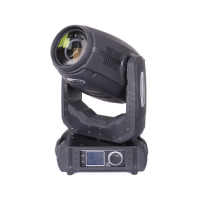
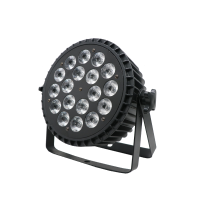
In professional lighting fixtures, multiple diodes—often red, green, blue, and white—are combined to create colorful LED light output. These systems excel at producing smooth color washes, gradients, and soft illumination. Because LEDs emit incoherent light, their beams naturally spread as they travel, making them ideal for general coverage rather than precision.
This optical behavior explains why LED fixtures dominate wash lighting, front lighting, and architectural applications. When people compare LED and laser difference, this divergence is one of the most important factors.
What Makes Laser Lighting Fundamentally Different?

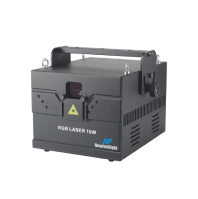
Laser lighting operates on an entirely different principle. The term laser refers to Light Amplification by Stimulated Emission of Radiation. A laser light source emits coherent, highly directional light with extremely low divergence.
This coherence is the core reason the difference between laser and LED is so visually obvious. A laser beam stays narrow and intense over long distances, while LED beams gradually soften. In professional environments, this makes lasers ideal for aerial effects, sharp projections, and graphic visuals.
Modern laser lighting technology uses solid-state laser diodes—red, green, and blue—to create full-color output. When professionals compare laser diode vs LED, they are really comparing precision versus diffusion.
Laser Beam Control vs LED Beam Behavior

A key part of the laser vs light discussion is beam control.
LED fixtures rely on lenses and reflectors to shape light, but the beam inevitably spreads. This makes LED lighting forgiving and versatile, but less suitable for razor-sharp effects. In contrast, a laser light beam can be scanned, shaped, and projected with extreme accuracy.
This is why laser lighting is used for logo projection, text, geometric patterns, and immersive visual structures. When combined with atmospheric haze, lasers create the iconic aerial effects associated with modern concerts and clubs.
Professionals choosing between laser projector vs LED systems often base the decision on whether the design requires precision or coverage.
Color Performance: LED vs Laser
LED systems are known for flexibility. A single fixture can generate thousands of colors and subtle pastel tones, making them perfect for mood lighting. However, laser colors are fundamentally different.
Each laser wavelength produces a highly saturated, pure color. Even when using RGB laser systems, the resulting hues appear more intense than LED blends. This is why laser light is often perceived as brighter, even at lower power levels.
When designers compare laser and LED difference in color performance, lasers win in impact, while LEDs win in smooth blending.
Energy Efficiency and System Output

From an electrical standpoint, both technologies are efficient—but in different ways. LED fixtures consume more power overall because they illuminate large areas. Laser systems concentrate energy into a narrow beam, allowing them to achieve high visual intensity with relatively low electrical consumption.
This efficiency is one reason laser LED lights and hybrid systems have become popular in professional setups. For touring shows and permanent installs, power efficiency translates directly into lower operating costs and simpler infrastructure.
Practical Applications in Real Productions

In real-world lighting design, the question is rarely laser or LED—it’s how to use both effectively.
LED lighting establishes the foundation: ambience, visibility, and comfort. Laser lighting adds structure, motion, and visual identity. In clubs, festivals, and branded events, lasers create moments that audiences remember. In theaters, corporate events, and broadcast environments, LEDs provide consistency and control.
This complementary approach is why professionals no longer debate laser vs LED as competing technologies, but rather as tools with distinct roles.
Safety and Professional Standards

Another major difference between laser diode and LED lighting lies in safety regulation. LEDs are generally low-risk optically, while lasers require strict compliance with safety standards.
Professional laser systems include scan-fail protection, safety shutters, key switches, and emergency stops. At Newfeel Light, every professional laser projector is designed to meet international safety requirements, making them suitable for public and commercial use.
Making the Right Choice

When clients ask whether LED vs laser lighting is better, the honest answer depends on intent. LEDs are unmatched for general illumination and color washes. Lasers excel at precision, graphics, and dynamic motion.
For professionals comparing laser vs LED lighting, the best results come from understanding the physics behind each technology—not marketing claims. When used correctly, lasers and lights together create depth, rhythm, and unforgettable visual experiences.
Final Perspective
The real value in understanding laser and LED difference lies in control. When lighting designers know exactly how each technology behaves, they can design systems that perform reliably in real venues—not just in demo videos.
At Newfeel Light, we believe the future of professional lighting lies not in choosing sides, but in mastering both. Laser lighting and LED lighting are not rivals—they are complementary tools in the hands of knowledgeable professionals.


