


Table of Contents
- Power Is Only the Starting Point
- Beam Quality Defines Professional Results
- Atmosphere Makes or Breaks a Laser Show
- Control Workflow Determines Creative Freedom
- Safety and Compliance Are Non-Negotiable
- Camera Considerations for Broadcast Venues
- Troubleshooting and Maintenance: The Reality of Daily Operation
- Matching the Laser to the Venue: A Strategic Decision
- Final Thoughts: Choose With the Future in Mind
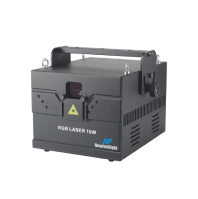
For production companies, integrators, and event designers, choosing a laser light is never just a matter of picking a wattage. A professional laser projector becomes part of the visual identity of a venue, part of the workflow for the crew, and part of the overall experience delivered to audiences. When used correctly, laser stage lighting defines atmosphere, anchors the audience’s attention, and adds the kind of architectural precision that other fixtures can’t match.
Yet the market is wide, and the specifications can be confusing. Power ratings, beam divergence, control protocols, compliance rules—each plays a role in determining whether a system truly fits the space. A nightclub does not have the same needs as a theme park; a touring rig does not behave like a permanent installation. The right choice comes from understanding how these elements work together.
Power Is Only the Starting Point

Professionals often begin by asking about wattage. And while power matters, it rarely tells the full story. A 6W RGB laser system with excellent optics can outperform a 10W unit with poor beam divergence. What your project really requires is a combination of visibility, color balance, and distance.
Smaller indoor venues—clubs, lounges, dance halls—often find that a 1–3W system is sufficient for clean aerial beams and simple graphics. Medium theaters and corporate stages benefit from 6–10W projectors that maintain visibility even under strong ambient lighting. Outdoor events, city shows, and festival stages almost always call for 10–20W high-power laser projectors to retain structure over long distances. Architectural installations, skyline effects, and landmark projections sometimes exceed 30W depending on the design.
Understanding the space—height, depth, ambient light, haze availability—is far more important than focusing on power output alone. A responsible purchase aligns the system with real-world operating conditions.
Beam Quality Defines Professional Results

When lighting designers talk about a “tight beam,” they are referring to low beam divergence. This determines how much the beam spreads over distance, and it is one of the most overlooked specifications in the entire industry.
For indoor environments, a slightly wider beam can create a softer look that blends with other fixtures. For long-throw outdoor installations, however, a narrow beam is essential. High-end commercial laser projectors preserve beam structure across hundreds of meters—something impossible with low-grade optics.
Color is also part of beam quality. Human vision is most sensitive to green, which often appears brightest even at lower wattage. A balanced RGB laser system ensures that red and blue remain visible and that color mixing remains clean when programming complex aerial scenes.
Atmosphere Makes or Breaks a Laser Show

Even the best industrial laser projector becomes nearly invisible without the right atmosphere. Lasers require particles in the air—usually haze or low-density fog—to reveal their geometry. In controlled indoor spaces, this is easy to manage. Outdoor shows, however, must consider wind, humidity, and temperature changes.
For permanent attractions or seasonal events, designers often use integrated outdoor hazers or strategically placed fog units to maintain consistency. Without atmosphere, even a high-power beam becomes a faint line at best.
This is why professional laser stage lighting is always evaluated with atmospheric planning in mind. The vision is not just the equipment—it’s the environment that completes the effect.
Control Workflow Determines Creative Freedom

A modern venue rarely treats lasers as a standalone effect. Today’s designers need integration: DMX, ArtNet, ILDA, time-code synchronization, multi-zone masking, safety zoning, and repeatable presets for recurring shows.
A DMX laser system is the minimum requirement for most professional environments, and software-controlled units allow advanced programming such as:
Architectural beam sweeps
Multi-zone aerial effects
Audience-safe patterns
Logo projections
Time-coded choreography with moving lights
For touring lighting designers, the priority is flexibility. For fixed installations, the priority is automation and reliability. A good industrial laser projector adapts to both, offering console control as well as built-in operation modes for daily schedules.
Safety and Compliance Are Non-Negotiable

For B-end buyers, laser safety is not optional—it’s regulated. High-power lasers fall under IEC and FDA classifications, which dictate how they can be used in public environments.
A professional laser projector for stage or outdoor use must include:
Scan-fail safety
Shutter protection
Emergency stop capability
Zoning and masking functions
Interlock support
These protections ensure that beams remain above audience level, avoid camera positions, and respect MPE (Maximum Permissible Exposure) limits. Properly installed and properly controlled, laser stage lighting is safe for venues, performers, audiences, and broadcast crews.
When evaluating suppliers, always confirm that their systems meet both optical and regulatory standards.
Camera Considerations for Broadcast Venues

Modern events often rely heavily on video. Direct exposure to concentrated laser beams can damage camera sensors—especially on high-end broadcast cameras. That’s why professional operators use zoning tools to automatically block beams at camera locations.
If your venue hosts televised events or influencer-driven concerts, this becomes a critical feature. A high-power system without proper zoning is a risk many production companies will not take.
Troubleshooting and Maintenance: The Reality of Daily Operation

Even the best equipment needs proper setup. If a new laser does not output or seems limited in mode selection, the most common causes are simple:
Incorrect voltage
Missing interlock
Key switch not engaged
DMX addressing errors
Incorrect ILDA routing
Scan-fail protection blocking a too-small pattern
Professional buyers choose suppliers who provide responsive technical support, because downtime during a show build can be costly.
Maintenance is equally important. Clean optics, proper cooling, and stable power supply extend the life of a laser system significantly—especially in outdoor environments.
Matching the Laser to the Venue: A Strategic Decision

Every venue has a personality. A nightclub needs fast beams and dynamic movement. A theater may need precise graphics. A theme park requires high-power outdoor laser projectors that run nightly with minimal maintenance. A rental house needs durability above all else.
Laser selection should reflect this reality:
Clubs & small event spaces → 1–5W RGB systems
Corporate shows & midsize theaters → 5–10W projectors
Outdoor festivals → 10–20W high power systems
Architectural installations → 20–40W+ long-throw units
A mismatch—too weak or too strong—creates design limitations or safety concerns. A correct match enhances programming possibilities and reduces operational stress.
Final Thoughts: Choose With the Future in Mind
A laser system is not just a purchase; it’s an investment in your venue’s creative flexibility. The right professional laser projector expands your capabilities, strengthens your brand identity, and supports the long-term value of your show production.
When the selection process is handled thoughtfully, laser stage lighting becomes one of the most impactful, reliable, and versatile tools in a designer’s visual arsenal.


